

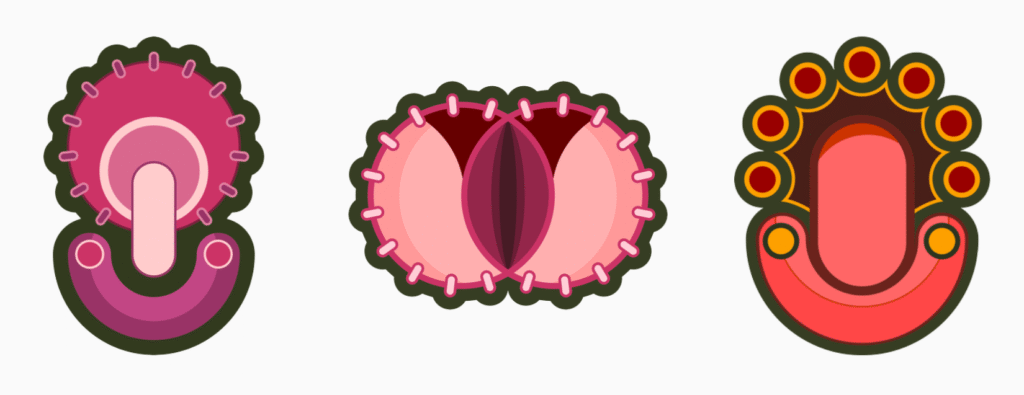
The task was to design a template for making – tapestry diptych inspired by ponjava woolen blankets characteristic of the Croatian Posavina region. These blankets were used to cover the beds of newlyweds during their wedding night and in the first years of marriage, and symbolized the desire for fertility and happiness. They are filled with symbolic, erotic and magical motifs that convey blessings and good wishes to the young couple and their offspring. Mushrooms, mirrors, birds, swirls and horses are just some of the motifs that make up the symbolic structure of the blankets.
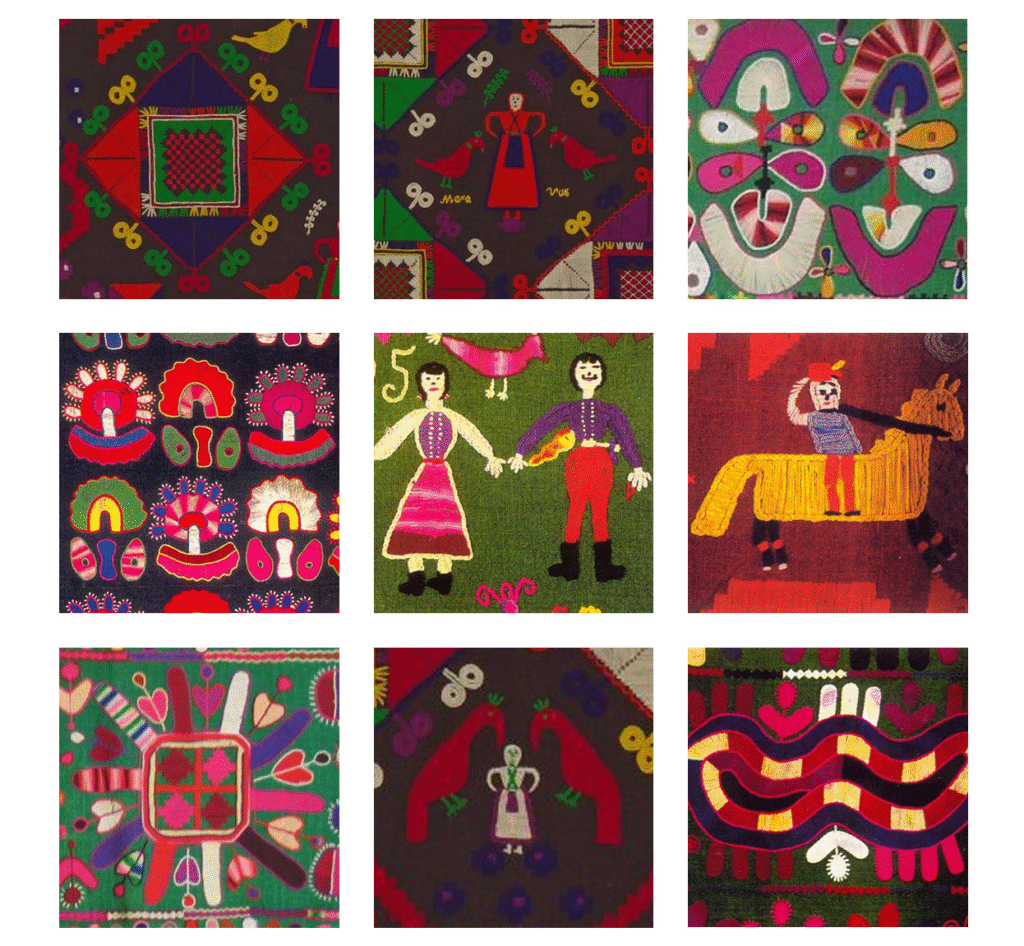
The motifs on Posavina canvases often reveal a somewhat childish view of
sexuality, which is not unusual considering the conservative environment in which it is
the expression of sexuality, especially female, is taboo. The naivety of the depictions does not diminish their layering; moreover, through these motifs, the tarpaulins become a space of creative and subtle sexual freedom. In an environment that limits the open expression of intimacy, the tarpaulins function as a hidden medium for playing with symbols, enabling artistic expression and emancipation within strictly defined social norms.
Nevertheless, this same tradition, which offers the majority traces of liberation through creativity,
at the same time, it completely excludes entire groups of people whose customs and life experiences do not exist for them. Thus, individuals do not find their reflection in the ethnos of their homeland. LGBT+ This work explores what the world would look like if there were no social restrictions and oblivion and if everyone had the right to expression and visibility within the framework of cultural heritage.
Homophobia manifests itself at the most basic level through dehumanization and degradation
LGBT persons, reducing their identity to a sexual act. This approach ignores the complex reality of their lives, including the isolation, shame, loneliness and other negative phenomena they face on a daily basis. Such a reduction not only denies their humanity but also encourages discrimination, perpetuates stereotypes and makes it difficult to create an inclusive society.
The creation of a new, inclusive narrative forms the basis of this work. How would marginalized communities create their own space within cultural and historical narratives? What artifacts might we find on lesbian farmsteads? What might Slavonian tarpaulins, with their colors, patterns, and techniques, reveal about the intimate experiences and family lives of gay couples?
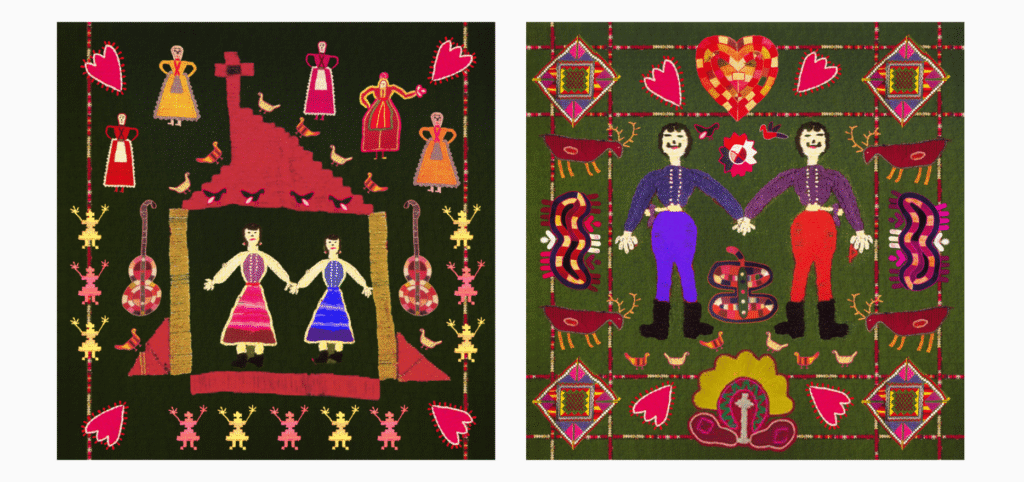
Although homosexual and lesbian couples are omitted from museum heritage, their existence cannot be denied. This visual analysis examines the mechanisms of their systematic exclusion from historical narratives.
The broken mirror symbolizes not only society's inability to see the full picture, but also the vulnerability of a community exposed to condemnation, stigma and curses. It becomes a metaphor for fragmented identities, as well as cracks in collective memory that refuse to acknowledge those lives.
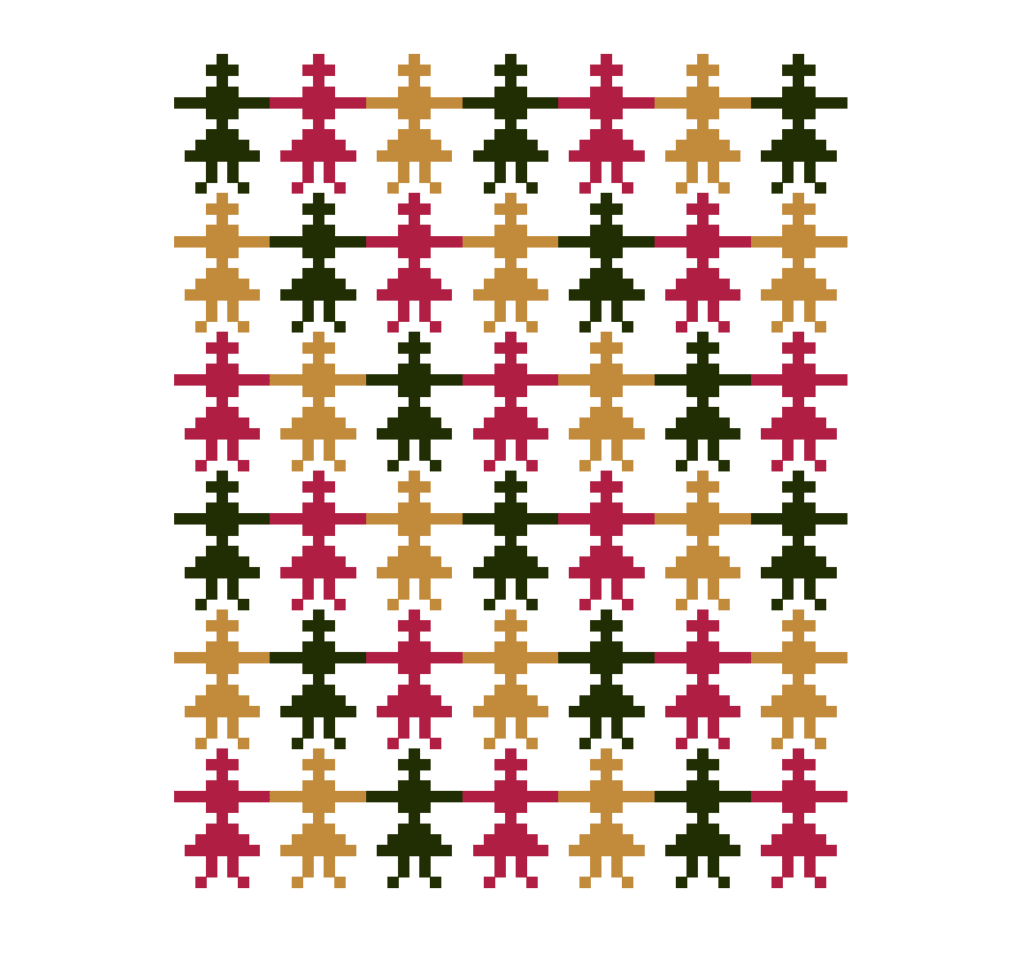
Pixelation, as a visual metaphor for censorship, represents the deliberate blurring and fragmentation of the presence of gay and lesbian couples. This technique reduces their identities to disconnected fragments, erasing authenticity and individuality, rendering them almost anonymous within a larger social context. Pixelation also reflects society's inability or unwillingness to accept their reality.
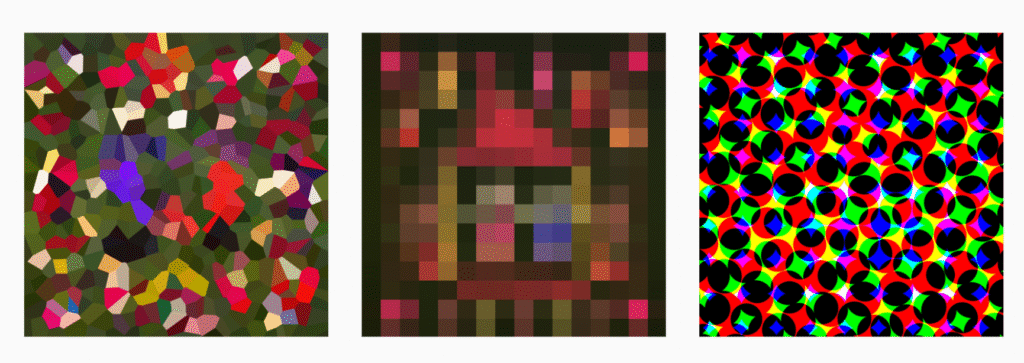
Dot printing, as a technique, adds a symbolic layer that bridges proximity and distance. This method evokes the paradox of things that are physically or emotionally close, but remain unrecognized due to a lack of focus. The optical illusion it creates reminds us of the phenomenon of “so close, yet so far away,” highlighting how we often overlook realities that are right in front of us. This effect encourages us to reexamine our perceptions and opens up space for rediscovering what we may have previously ignored.